
Mold Remediation
Dallas–Fort Worth
Mold growth can affect building materials and indoor conditions. Reliant Disaster Group discusses containment, material handling, cleaning, moisture management, and repair options for DFW properties based on the affected area.
DFW
Restoration Team
HEPA
Filtration & Containment
Verified
post-remediation assessment
Insurance
Documentation Support
A Hidden Threat
Mold can begin growing within 24–48 hours of a moisture event, and it often spreads inside walls, under flooring, and in HVAC systems long before it's visible. Many Dallas–Fort Worth homeowners only discover mold months after the original water event — by which point it has colonized significantly. Our remediation scope covers inspection and testing, full containment, HEPA air filtration, material removal, antimicrobial treatment, structural drying, post-remediation assessment, and reconstruction.
Bleach and household products do not remediate mold — they mask it. Proper remediation requires containment, HEPA filtration, targeted material removal, and verified post-remediation assessment. Any shortcut creates liability and recurrence, which is why we follow industry S520 standards on each project.
Common Causes in North Texas
- Unresolved water damage or slow, hidden leaks
- High indoor humidity — common in DFW's muggy summers
- Poor ventilation in bathrooms, kitchens, or crawl spaces
- Flood water that was never properly dried
- Roof leaks and moisture intrusion after hail storms
- HVAC condensation and clogged drain lines
- Plumbing leaks inside walls or under clay-soil slabs
Warning Signs & Health Dangers
- Visible mold growth — black, green, white, or gray spots
- A musty, earthy odor in bathrooms, closets, or crawl spaces
- Allergy-like symptoms that improve when you leave the building
- Water stains or discoloration on ceilings and walls
- Peeling paint or wallpaper with no obvious cause
- Warped or buckled materials where water was once present
- Recurring condensation on windows and interior walls
Why Fast Response Matters
Mold spreads exponentially — a small colony can double within days under the right conditions, and DFW humidity provides them. The longer remediation waits, the more materials must be removed and the higher the health risk to occupants, especially children, seniors, and those with respiratory conditions.
Our 8-Step Mold Remediation Process
Assessment
We review visible conditions, moisture concerns, access, and the affected materials to plan next steps.
Containment Planning
The appropriate work-area controls are discussed for the scope and property conditions.
Air & Surface Approach
Cleaning and air-management options are selected for the affected area and materials.
Material Handling
Affected materials are assessed for cleaning, removal, or repair planning as appropriate.
Targeted Cleaning
Cleaning methods are chosen for the material, growth conditions, and work area.
Address Moisture
The plan identifies moisture conditions that should be addressed to reduce recurrence risk.
Project Records
Available photos, readings, and work records can be organized for your files.
Repair Planning
Removed drywall, insulation, flooring, and finishes can be included in a repair plan after the affected area is ready.
Why DFW-Local Experience Matters
Mold in Dallas–Fort Worth is a symptom of very local conditions. Between muggy summers, hail-battered roofs, and clay soil that constantly cracks under-slab plumbing, North Texas homes face moisture threats a national franchise won't anticipate. Reliant knows where DFW mold hides — and how to keep it from returning.
Humid Summer Climate
DFW summers combine heat with high humidity, and air-conditioned homes create condensation on cool surfaces. That constant moisture feeds mold in attics, wall cavities, and around HVAC systems — the areas we check first.
Clay Soil Slab Leaks
Expansive clay swells and shrinks with the seasons, shearing under-slab plumbing lines. These slow, hidden leaks saturate flooring and walls for months, producing mold well before homeowners notice a problem.
Hail & Freeze Aftermath
Hail-damaged roofs and freeze-burst pipes leave moisture behind that, if not fully dried, becomes tomorrow's mold. We tie remediation to proper structural drying so a storm loss doesn't turn into a colony.
We remediate mold throughout the Metroplex — including Dallas, Fort Worth, McKinney, Allen, Frisco, and Plano. Explore every community on our service areas page.
One Team, Every Property Type
Residential Mold Remediation
For homes, the plan should account for the affected area, how occupants use nearby rooms, the moisture source, and which materials can be cleaned or may need removal.
Bathrooms, attics, wall cavities, and areas around plumbing or roof leaks can each require different access and moisture-control steps.
Commercial Mold Remediation
For DFW businesses and property managers, the work plan can account for occupants, tenant communication, access, operating hours, and phased areas where conditions allow.
We serve offices, schools, apartments, and healthcare facilities, scaling to large-loss events.
Insurance & Documentation
Useful records may include photos, moisture information, the planned scope, work notes, and any independent assessment documents available for the project.
Available project records can be organized for your files; confirm coverage and payment responsibilities with your insurer. See our insurance documentation support and water damage restoration.
- Moisture-source and affected-area notes when available
- Planned work scope and material-handling records
- Available project photos and progress notes
- Independent assessment records when part of the project
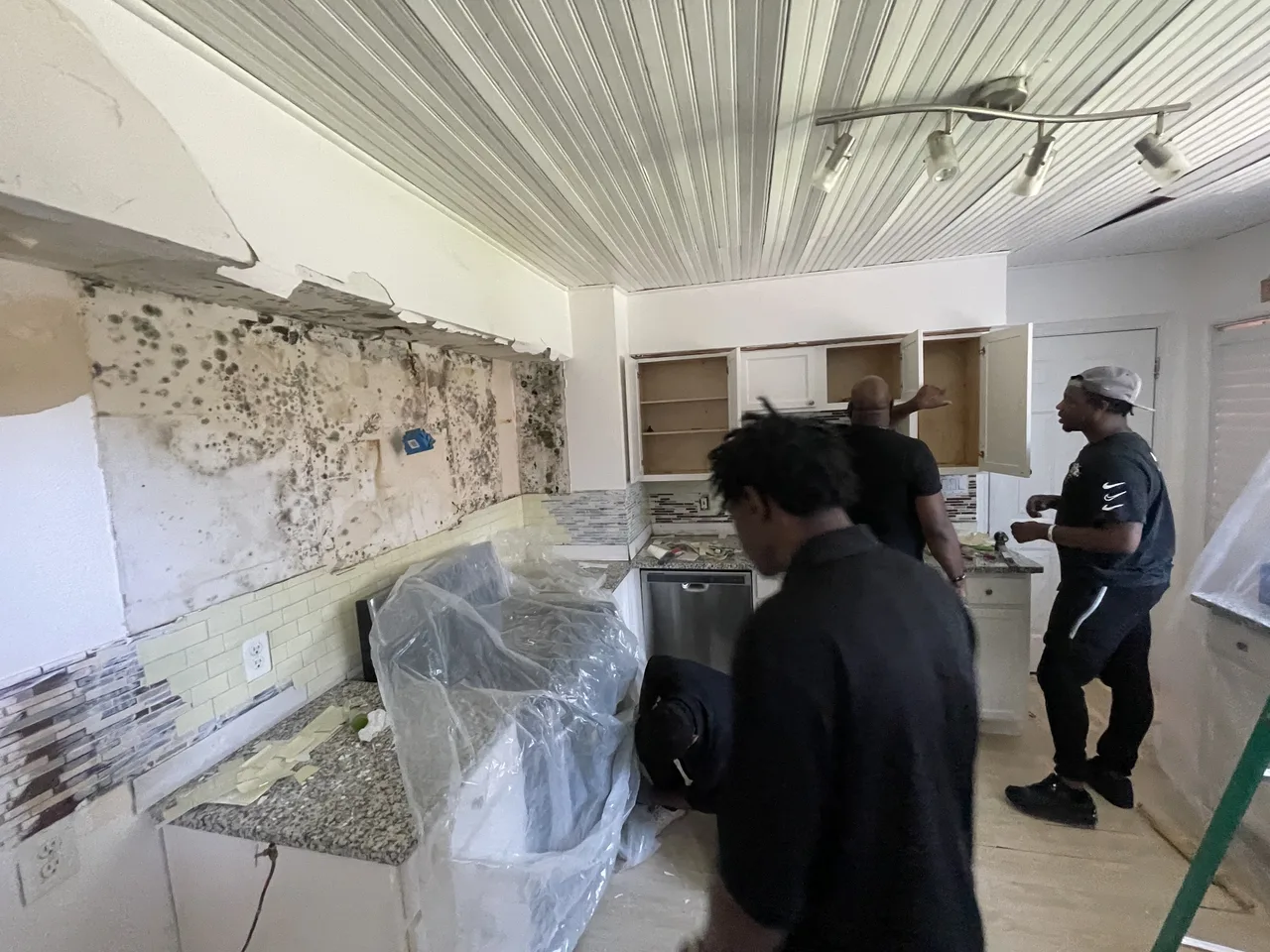
Mold Remediation Proof
See owner-approved field documentation of visibly affected kitchen wall material during assessment and remediation work.
Safe first steps
Avoid disturbing visible growth or using household chemicals on porous materials. Limit access to the area, address an active leak if it is safe, and photograph the conditions.
Keep useful records
Keep date-stamped photos, notes about the cause, receipts, and communications. Available project photos, readings, and work records can be organized for your files; policy and coverage decisions remain with your insurer.
Project documentation supportComplete Restoration Under One Roof
Got Questions?
Mold Remediation FAQs
How do I know if I have a mold problem in my Dallas–Fort Worth home?
Common signs include visible mold growth, a persistent musty odor, unexplained allergy-like symptoms that ease when you leave, and water-stained surfaces. In DFW's humid climate mold can hide inside walls and HVAC systems. If you suspect it, don't disturb it — call us for a professional assessment.
Is mold remediation covered by insurance in Texas?
Coverage varies by policy and the insurer's review. Keep records of the moisture event and confirm coverage with your insurer.
How long does mold remediation take?
Timing varies with the affected area, moisture conditions, access, and scope. A project-specific plan can be discussed after assessment.
Can I stay in my home during mold remediation?
Occupancy decisions depend on the affected area, planned controls, property layout, and occupant needs. Discuss the project-specific plan with the appropriate restoration and indoor-environment professionals.
Can mold return after remediation?
Future growth remains possible when moisture conditions return. Addressing leaks, humidity, ventilation, and other moisture sources is an important part of reducing recurrence risk.
Why is mold so common in North Texas?
DFW summers are hot and humid, and expansive clay soil stresses under-slab plumbing, producing hidden leaks. Combined with hail-driven roof leaks and tightly sealed, air-conditioned homes, these conditions create ideal environments for mold growth throughout the Metroplex.
Should I use household cleaners on suspected mold?
Avoid disturbing suspected mold, especially on porous materials. The appropriate next step depends on the materials, moisture source, and affected area.
Mold Remediation In Your City
Don't Wait on Mold.
Call Reliant for a mold assessment — residential, commercial, or large property across Dallas–Fort Worth throughout Dallas–Fort Worth.
Request This Service
Tell Us About Your Mold Remediation Needs
Share the service address, current conditions, urgency, and photos. This form is already set for Mold Remediation, so you do not need to select the service again.
Request Mold Remediation