Storm Damage Restoration
Arlington, TX
When hail affects the stadium district or straight-line winds damage roofs near Lake Arlington, call to coordinate tarping, board-up, and drying.
DFW
Service Area
24/7
Emergency Dispatch
Records
Documentation Support
Homes + Business
Property Types
24/7 Emergency Dispatch
Call any time for DFW service availability
Residential & Commercial
Restoration support for homes and businesses
Claim Documentation Support
Photos, records, and project details on request
Damage Assessments
Discuss your property and next steps with our team
Storm Damage Restoration in Arlington
Arlington sits directly in the North Texas hail belt, and its spot in the middle of the Metroplex means storms often intensify as they cross the mid-cities — so when severe weather hits, it hits hard. Spring supercells have repeatedly dropped large hail on the city, and the wide-open, parking-heavy entertainment district offers almost no shelter when a storm rolls through. But hail is only the opening move: impact points open the roof, wind-driven rain follows the damage inside, and straight-line winds tear off flashing, ridge caps, and fencing. Our Arlington storm crews carry tarps, shrink-wrap, board-up materials, and drying equipment on the same truck so we can stabilize the property and start protecting the interior on the first visit.
The way Arlington is built determines what storms break. The 1960s and '70s slab-on-grade and pier-and-beam ranch homes across East and North Arlington often carry aging roofs that don't shrug off hail the way newer materials do, and their mature trees drop limbs onto roofs and fences in high wind. Southwest Arlington's newer subdivisions near I-20 present larger, steeper roof planes that catch horizontal hail, while the retail, hospitality, and multifamily buildings around AT&T Stadium, Globe Life Field, and UTA face storm-breached roof membranes that can soak multiple floors and shut a business down. Every one of these needs a different stabilization plan the moment the storm clears.
The 2016 and 2020 hail seasons damaged countless Arlington roofs and vehicles, and the March 2021 severe weather outbreak brought damaging wind and hail across Tarrant County — but storms don't wait for a named event. A fast-moving line with strong gusts can peel flashing and pull down limbs any month of the year, and flash flooding along Village Creek, Johnson Creek, and Rush Creek can push water into low-lying homes at the same time. Whatever the storm leaves, our sequence is the same: secure the envelope first, document every impact for your Tarrant County carrier, then dry out anything the weather reached.
Common Causes in Arlington
- Hail impacts from spring supercells shredding shingles and cracking skylights across Arlington and the entertainment district
- Wind-driven rain forced past flashing and window frames on the larger, steeper roofs of Southwest Arlington's newer subdivisions
- Straight-line winds stripping ridge caps, flashing, and fence sections throughout the mid-cities
- Fallen limbs and downed mature trees puncturing aging roofs in East and North Arlington's ranch neighborhoods
- Storm-breached roof membranes flooding retail, hospitality, and multifamily buildings around the stadiums and UTA
- Flash flooding along Village Creek, Johnson Creek, and Rush Creek pushing water into low-lying homes near Lake Arlington
Our Arlington Storm Damage Restoration Process
Stabilization
Call to coordinate an assessment of roof tarps, shrink-wrap, or board-up for damaged openings after conditions are safe.
Damage Documentation
Photographs and notes can record visible hail impacts, roof conditions, and interior water intrusion for the property owner's files.
Water Extraction & Drying
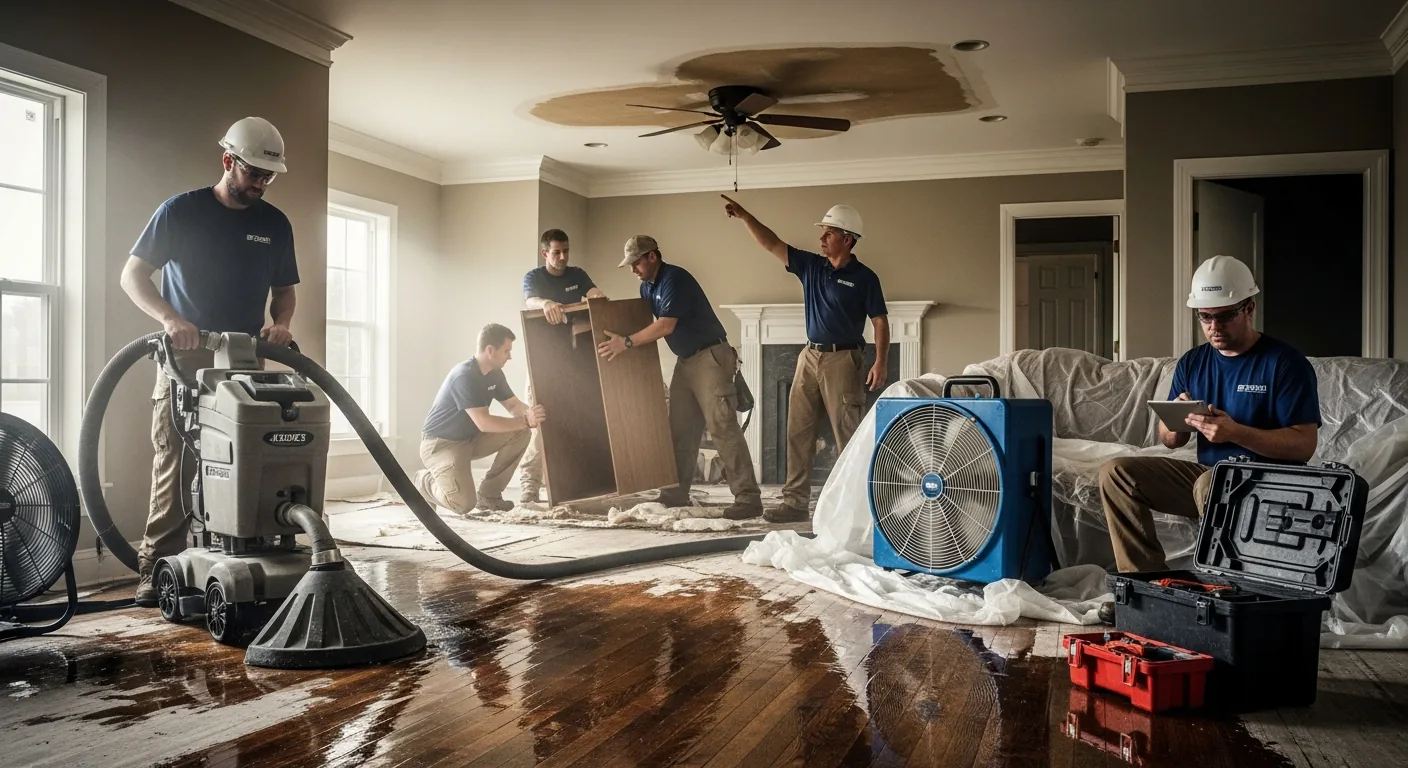
Where wind-driven rain reached the interior, we extract standing water and set air movers and LGR dehumidifiers, drying attics, ceilings, and wall cavities before saturated materials can grow mold.
Debris & Structural Repair
We clear downed limbs and storm debris, then repair or replace the compromised roof, decking, flashing, windows, and fencing so the structure is sound before finishes go back in.
Reconstruction Planning
The repair scope can include storm-affected drywall, paint, flooring, and trim, with sequencing and selections organized through one project plan.
Project Documentation in Arlington
Storm-loss coverage, deductibles, and exclusions vary by policy. Photograph impacts and water intrusion and review the policy with the insurer.
An itemized estimate can distinguish roof, exterior, drying, and interior repair work for your records.
Arlington Storm Damage Restoration FAQs
How do I arrange a tarp for my Arlington roof after a hailstorm?
Call to coordinate an assessment once storm conditions are safe. Photograph visible damage from the ground and avoid climbing onto a damaged roof.
Does my insurance cover hail and storm damage in Arlington?
Coverage and deductibles depend on the policy. Contact the insurer and retain dated photos and repair documentation.
A limb came through my roof in East Arlington during a windstorm — what's the first step?
Call us for an emergency board-up and tarp. The mature trees over Arlington's older ranch neighborhoods drop limbs in straight-line wind, and aging roofs puncture easily. We secure the opening, extract any water that got in, then handle the structural roof repair and interior rebuild together.
Can you handle storm damage to a commercial building near the Arlington stadiums?
Yes. Our large-loss division works the retail, hospitality, and multifamily properties around AT&T Stadium, Globe Life Field, and UTA — when a storm breaches a roof membrane, we contain the water spread, dry the affected floors with building-wide moisture mapping, and coordinate with property management and multiple carriers.
My Southwest Arlington home has water stains after a hailstorm — is the roof leaking?
Very likely. On the larger, steeper roofs common in Southwest Arlington's newer subdivisions, hail opens the shingles and wind-driven rain travels down through the ceiling and wall cavity before you see a stain. We trace the intrusion with thermal imaging, dry the structure, and repair the roof that let it in.
How long does storm damage restoration take in Arlington?
Emergency stabilization happens the day we arrive. Drying interior water intrusion usually runs 3–5 days, while roof and exterior reconstruction depends on materials and scope — but you get one point of contact managing the whole timeline from tarp to final paint.
More Services in Arlington
Storm Damage Restoration Nearby
Request Emergency Service
24/7 dispatch availability, documentation assistance, and restoration support from mitigation through reconstruction.